BLOG / SOCIAL MEDIA STRATEGY | B2B MARKETING · 25 October 2026
LinkedIn Organic Growth for B2B: Why Visibility Without Engagement Means Nothing
For B2B companies, visibility alone is not a strategy. Reach the right people and give them a reason to remember your business.
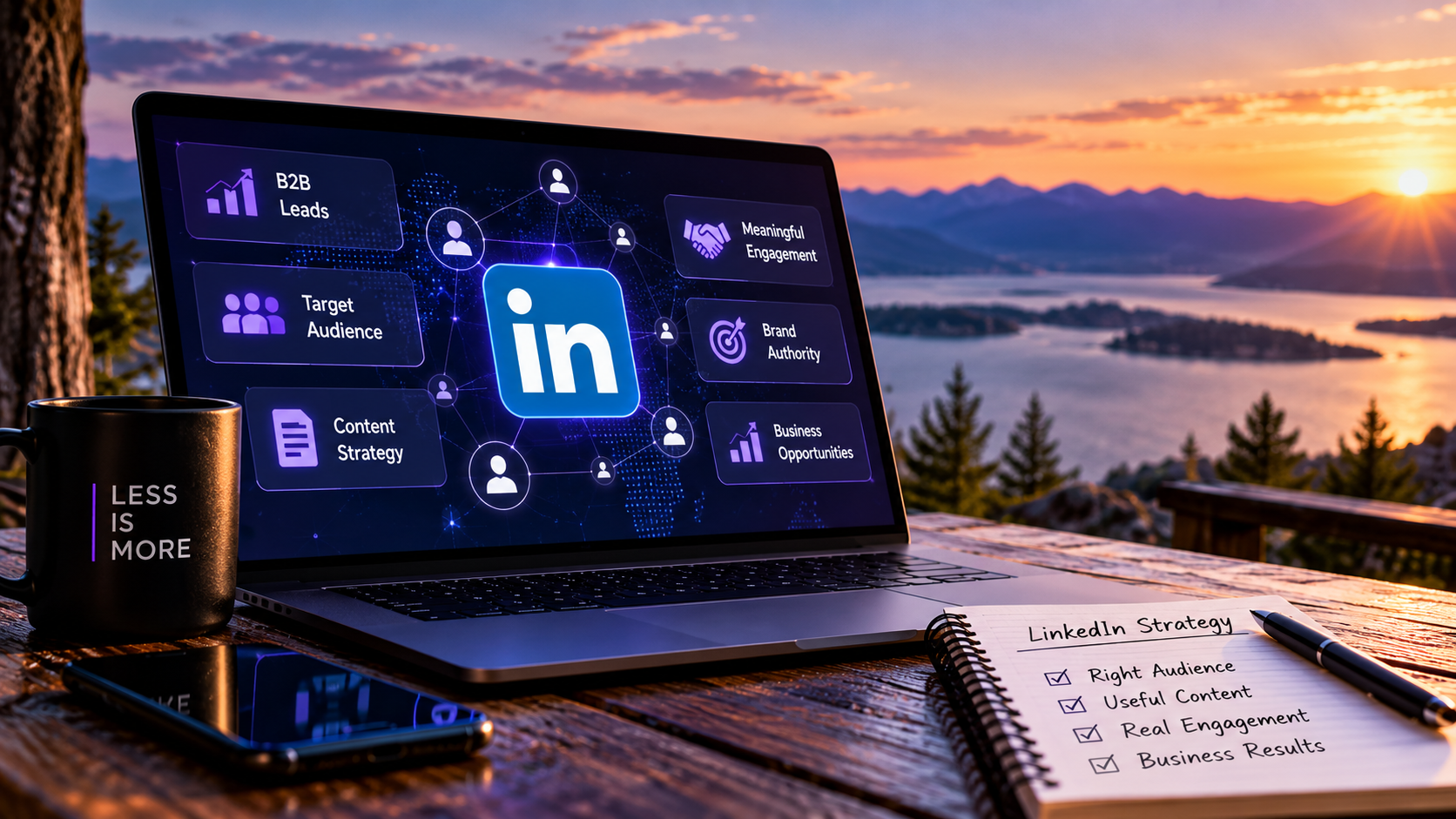
Category: Social Media Strategy | B2B Marketing · Reading time: 6–7 minutes
Getting thousands of impressions on LinkedIn might look impressive in a monthly marketing report. But what happens when those impressions generate no meaningful conversations, qualified leads, or business opportunities?
For B2B companies, visibility alone is not a strategy.
A post reaching 500 relevant decision-makers can be far more valuable than one reaching 50,000 people who have no interest in your products or services.
Yet many businesses continue to measure LinkedIn success primarily through follower counts, impressions, and likes.
The real question is much simpler:
Are you reaching the people who can influence or make purchasing decisions?
LinkedIn Is Not Just Another Social Media Platform
Unlike entertainment-driven social networks, LinkedIn operates within a professional environment where people discover industry insights, evaluate potential partners, and build business relationships.
For B2B companies, this creates opportunities to reach audiences based on professional roles, industries, company characteristics, and business interests.
Consider an IT company offering endpoint management solutions to organizations with more than 100 computers.
Its potential customers might include:
- IT Directors responsible for infrastructure and performance.
- CIOs evaluating technology investments.
- IT Operations Managers dealing with recurring technical problems.
- Procurement Managers comparing vendors and costs.
- Business leaders responsible for operational efficiency.
Reaching these professionals is more valuable than attracting thousands of followers with no connection to the company's target market.
However, job titles alone do not tell the whole story. Purchasing decisions often involve multiple stakeholders, and their concerns can be very different.
That is why an effective LinkedIn strategy starts with understanding the buying audience rather than simply publishing content.
Organic Growth Starts With the Right Audience
One of the most common mistakes in B2B social media marketing is trying to appeal to everyone.
Broad content may generate impressions, but it rarely communicates why a particular company should consider your solution.
Before developing a content calendar, businesses should answer several questions:
Who are we trying to reach?
Identify the industries, company sizes, geographic markets, and professional roles that represent your ideal customers.
What problems are these people trying to solve?
An IT Director may care about reducing downtime, while a CFO may be more interested in controlling technology costs.
What information do they need before making a decision?
Some prospects are discovering a problem. Others are comparing solutions or preparing to contact vendors.
Each stage requires a different type of content.
A well-defined audience makes it easier to create posts that are relevant, useful, and connected to business objectives.
Stop Selling in Every Post
Imagine following a company that publishes the same message every day:
"Our software is the best. Book a demo today."
How long would you continue paying attention?
B2B audiences do not open LinkedIn simply to read advertisements.
They want information that helps them understand challenges, evaluate options, and make better professional decisions.
This is where many companies miss an opportunity.
Instead of constantly promoting features, explain the problems those features solve.
For example, rather than publishing:
"Our platform provides advanced endpoint analytics."
Try:
"Why are companies replacing perfectly functional computers? Poor visibility into device performance can lead to unnecessary hardware spending."
The second approach introduces a recognizable business problem and creates an opportunity for discussion.
It also gives the company a reason to explain its expertise without turning every post into a sales pitch.
Good B2B content demonstrates value before asking for attention, trust, or money.
Build a Content Strategy Around Business Problems
A sustainable LinkedIn strategy needs variety, but every content category should support a clear business objective.
For many B2B companies, five content pillars provide a practical starting point.
1. Educational Content
Explain industry challenges, common mistakes, and practical solutions.
Examples:
- Five reasons IT departments struggle to identify recurring device problems.
- How to evaluate the real cost of employee technology downtime.
- What businesses should consider before investing in new software.
Educational content helps potential customers understand problems they may not have fully recognized.
2. Industry Insights
Discuss relevant market developments, emerging technologies, and changes affecting your customers.
The objective is not to repeat industry headlines.
Explain what those developments mean for the audience and how they might influence business decisions.
3. Case Studies and Practical Experience
Show how your company approaches real challenges.
A useful case study explains the initial problem, the approach taken, and the outcome.
Where possible, support claims with measurable results.
If confidentiality prevents sharing customer details, anonymized examples can still demonstrate practical expertise.
4. People and Company Expertise
Employees often have valuable knowledge that never appears in official company communications.
Technical specialists, consultants, product managers, and customer-facing teams can contribute perspectives that make content more credible.
Employee participation should be voluntary, authentic, and supported by clear guidance.
5. Product and Service Content
Product-focused content remains important.
The difference is how it is presented.
Instead of listing features, explain use cases, implementation considerations, and business outcomes.
A product demonstration becomes more useful when the audience understands which problem it addresses.
Company Pages and Personal Profiles Should Work Together
A company page establishes an official presence, communicates positioning, and provides a central location for updates.
But B2B relationships are ultimately built between people.
A technical expert sharing a practical observation can create a different kind of conversation from a corporate announcement.
This does not mean every employee needs to become a LinkedIn influencer.
It means businesses should recognize the value of knowledgeable employees who are comfortable participating in professional discussions.
A coordinated approach can include company posts, expert commentary, thoughtful engagement with industry conversations, and occasional employee-authored content.
The goal is not artificial engagement.
It is to make genuine expertise more visible.
Engagement Is More Than Likes and Comments
A post with hundreds of likes may generate little business value.
Another post with only a handful of comments might start a conversation with a potential customer who later requests a meeting.
Neither outcome can be judged from engagement numbers alone.
For B2B companies, meaningful engagement may include:
- A relevant decision-maker asking a technical question.
- A potential partner sharing an article with colleagues.
- A prospect visiting the company website after reading a post.
- A professional conversation developing into a qualified sales inquiry.
These interactions are not guaranteed to produce revenue, but they can indicate that content is reaching the right audience.
The quality of engagement matters at least as much as its quantity.
How Often Should B2B Companies Post?
There is no universal posting frequency that guarantees organic growth.
A company publishing three useful posts per week may achieve better business results than one publishing daily without a clear strategy.
Consistency matters because it creates opportunities for repeated exposure and learning.
But consistency should not come at the expense of relevance.
For a small B2B marketing team, starting with three well-developed posts per week can be a manageable testing approach.
The content calendar should allow time for research, subject-matter input, publishing, community engagement, and performance analysis.
After several weeks, the team can review results and adjust the frequency.
The objective is to build a sustainable process rather than fill every available publishing slot.
Measure What Actually Matters
LinkedIn analytics provide useful information about reach, impressions, followers, clicks, and engagement.
These metrics help explain content performance, but they should not be confused with business outcomes.
A practical B2B measurement framework connects three levels.
Visibility
Are relevant professionals discovering your content?
Track reach, impressions, follower growth, and available audience information.
Engagement and Interest
Are people showing meaningful interest?
Examine relevant comments, profile visits, website clicks, content interactions, and conversations.
Business Outcomes
Is LinkedIn contributing to commercial opportunities?
Monitor qualified inquiries, meeting requests, demo bookings, and opportunities influenced by LinkedIn activity.
Use website analytics, CRM data, and appropriate tracking links to connect activity where possible.
Not every buying decision can be attributed to a single post, especially in B2B sales cycles involving multiple stakeholders.
That makes it important to combine quantitative reporting with feedback from sales teams and customers.
Organic LinkedIn Growth Takes Time
Unlike paid advertising, organic content does not provide guaranteed distribution.
Results depend on the audience, relevance, content quality, competition, platform behavior, and ongoing engagement.
A company should not expect a few weeks of posting to produce a predictable number of qualified leads.
Instead, think of LinkedIn as a long-term channel for demonstrating expertise, building familiarity, and supporting business development.
Some posts will perform better than others.
Some valuable conversations may happen privately.
And some prospects may follow a company's content for months before making contact.
That is why evaluating organic LinkedIn performance requires patience, consistency, and a clear understanding of the sales process.
Less Noise. More Business Impact.
Successful B2B LinkedIn marketing is not about becoming the loudest company in the feed.
It is about reaching relevant professionals with information they find valuable.
That requires a clear audience, practical content, credible expertise, meaningful engagement, and performance measurement connected to business objectives.
Followers and impressions have their place.
But they are indicators, not the final destination.
The objective is not to reach everyone. It is to reach the right people and give them a reason to remember your business.
Build a LinkedIn Strategy That Supports Your Business
At Less Is More, we help businesses connect social media strategy, content development, organic growth, and performance reporting.
Whether your objective is stronger B2B visibility, better audience engagement, or more qualified business conversations, the starting point is the same: understanding who you want to reach and why they should care.
Less noise. More impact.
MONTHLY NEWSLETTER
Less inbox noise. More useful marketing.
One useful email a month with practical updates from social media, content marketing, SEO, AI search and digital marketing.
- No daily promotions.
- No endless sales emails.
- Only changes, ideas and tools worth knowing about.
RELATED ARTICLES
More posts won’t fix your marketing: what I’ve learned from over 10 years of working in social media
Most brands don’t have a problem with the amount of content they produce. They have a problem with relevance.
How Much Does a Business Website Cost and What Are You Actually Paying For?
What the €249 starting package includes, which optional services make sense and how to separate development from domain, hosting and maintenance costs.
SEO Is No Longer Enough: How AI Search and GEO Are Changing Brand Visibility
Discover how SEO, AI Search and GEO influence brand visibility, and learn five practical ways to improve your business's online discoverability.