BLOG / SOCIAL MEDIA · 20 October 2026
More posts won’t fix your marketing: what I’ve learned from over 10 years of working in social media
Most brands don’t have a problem with the amount of content they produce. They have a problem with relevance.
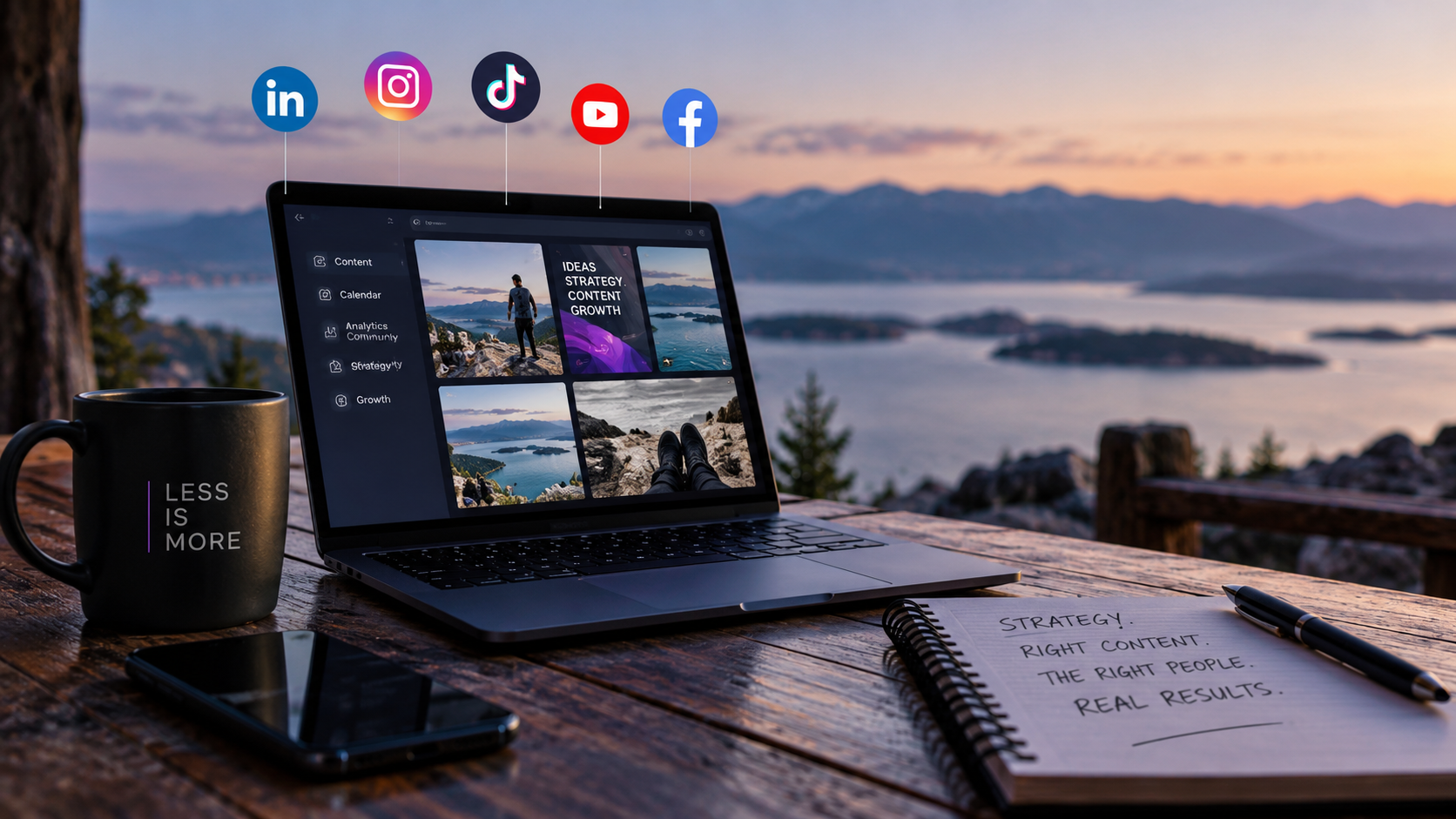
One of the most common mistakes I see brands make is believing that the problem is simply that they aren’t posting enough.
If reach drops, post more. If engagement drops, create more content. If sales aren’t growing, add another Reel.
But after more than ten years of working with different clients, industries and markets, it has become clear to me that most brands don’t have a problem with the amount of content they produce.
They have a problem with relevance.
You can post every day and still see very few results if your content has no clear reason to exist, no clear audience and no clear purpose.
And that, to me, is the main difference between simply “posting” and doing actual marketing.
More content is not the same as better marketing
Social media is much more saturated today than it was a few years ago.
Audiences have more choice. Platforms have more content. AI has accelerated production even further, making it easier than ever to produce something that looks decent but leaves no impression.
Interestingly, HubSpot states in its 2026 State of Marketing report that 80% of marketers already use AI to create content, while 75% also use it for media production. At the same time, the report emphasises that the biggest challenge today is standing out in a sea of average content. HubSpot
That matches what I see in practice perfectly.
The problem is no longer “Can we create enough content?”
We can.
The question is: does anyone want to see that content?
Before I think about how many times a week to post, I look at a few other things first:
- Who is the audience?
- What is useful to them?
- What problem are they trying to solve?
- Which platform makes the most sense for that content?
- And what do we want someone to do after seeing the post?
Without those answers, a content calendar can very easily become nothing more than a list of empty dates to fill.
Content pillars matter more than content volume
Good content usually doesn’t start with the question:
“What are we going to post today?”
It is much more useful to first define a few clear themes around which to build your communication.
For a B2B brand, those might be education, industry insights, case studies, thought leadership and customer problems.
For a lifestyle brand, they might be the product, education, experience, community and behind-the-scenes content.
When your content pillars are clear, content becomes much easier to plan, connect and repurpose across different platforms.
And repurposing is one of the more important marketing practices in 2026. According to HubSpot, 35.08% of marketers cite adapting and reusing content across different channels as one of their key tactics. blog.hubspot.com
That doesn’t mean copying the same post five times.
Quite the opposite.
One good idea can live on five platforms, but it shouldn’t look the same on all five.
The same content doesn’t belong on every platform
LinkedIn isn’t TikTok. TikTok isn’t Facebook. Facebook isn’t Instagram.
Of course you can use the same topic across several channels, but the format and the way you communicate shouldn’t be identical.
LinkedIn is better suited to professional context, experience, analysis and a B2B perspective.
TikTok calls for a quicker hook, a simpler message and a more natural format.
Instagram is highly visual, but building meaningful organic reach is much harder today without short-form video.
Facebook can still be very useful for community, local audiences, offers and content distribution.
The data points in the same direction. HubSpot says that short-form video currently has the highest reported ROI among content formats, with around 49% of marketers ranking it at the top. HubSpot
That doesn’t mean every brand now needs to become a TikTok channel.
It simply means the format needs to reflect how audiences consume content today.
That is why I believe much more in repurposing than in copy-and-paste.
One good idea can become a LinkedIn post, a carousel, a Reel, a TikTok video, a newsletter and a blog article.
But each of those formats needs to be adapted to its platform.
Consistency doesn’t mean posting every day
One project I worked on for a long time further reinforced just how important continuity is.
With a regular posting rhythm, quality educational content and active distribution, organic reach can grow gradually and steadily.
When that rhythm stops, a drop in distribution often becomes visible very quickly.
But that doesn’t mean the solution is to post seven days a week.
Consistency means having a system you can sustain.
For one brand, that might mean five posts a week. For another, three quality LinkedIn posts. For a third, daily TikTok content.
It is better to publish three good pieces of content every week for a year than seven a day for a month and then disappear.
Engagement isn’t something that happens after a post
Many social media plans end the moment the content is published.
To me, that is where the second part of the work begins.
Organic growth also depends on how present you are among the people you want to attract.
That means replying to comments, taking part in relevant conversations, following profiles in your industry and building real relationships.
For B2B brands in particular, one quality conversation can be worth more than hundreds of superficial reactions.
And as audiences become more selective, that human element matters even more. In early 2026, Sprout Social reported that 66% of social media users are more selective about the content they engage with than they were a year earlier. investors.sproutsocial.com
That is another reason why simply “being active” no longer cuts it.
You need to give people a reason to notice you.
Analytics isn’t just for the monthly report
Numbers only make sense if you change something based on them.
I don’t see performance reporting as the end of the month, but as the beginning of the next content cycle.
Which topics got the most reach?
Which formats held people’s attention?
What generated profile visits, clicks or conversations?
What didn’t work?
If we keep publishing the same content regardless of the results, analysis has no value.
Strategy needs to evolve along with the data.
Content today is no longer just “social media content”
Another major change is the way people find information.
We used to talk about Google search and social media as two separate worlds.
Today, people look for answers on TikTok, YouTube, LinkedIn, Reddit and Google, but also through AI tools.
AI search is definitely growing. But it still hasn’t replaced traditional search.
Semrush analysed more than 50,000 websites and recorded a 66% increase in AI traffic during 2025. Even so, AI traffic still accounted for only around 0.14% of total website visits, while organic search remained a much larger channel. Semrush
I find that figure particularly interesting because it shows why it makes no sense to chase every new trend while neglecting the fundamentals.
AI search is growing.
SEO isn’t dead.
Social isn’t dead.
Blogs aren’t dead.
We just shouldn’t look at any of them in isolation anymore.
One good answer to a specific question can help organic reach on social media, SEO, brand authority and potentially visibility in AI results.
That is why quality content has more value today than it might seem at first glance.
Where does AI fit into all of this?
I use AI every day.
For research, brainstorming, structure, analysis, ideas and speeding up certain parts of the process.
But there is a big difference between using AI as a tool and handing over all your communication to it.
Audiences quickly recognise when content sounds like hundreds of other posts.
And that brings us back to the beginning.
If we all have access to the same tools, the tool itself is no longer an advantage.
The advantage becomes experience, context, perspective, understanding your audience and the ability to say something in your own way.
HubSpot’s 2026 State of Marketing report points in exactly that direction: AI has already become a standard part of the marketing workflow, but growth is increasingly tied to a clear brand point of view, relevance and human creativity. HubSpot
AI can help us work faster.
On its own, it cannot give people a reason to listen to us.
Less content. More reasons for someone to pay attention.
If I were starting to build a social media strategy for a new brand today, my first question wouldn’t be:
“How many posts can we create?”
I would ask:
“What can we say or show that would be useful enough to make the right person stop?”
Only then do the number of posts, the format and the calendar come into play.
Because more content isn’t a strategy.
A good system is.
And at a time when anyone can produce ten posts in a few minutes, I would say that the ability to create less content that is more relevant and distinctive will become increasingly important.
If you aren’t sure whether your marketing needs more content or simply a better structure, you can start with my free 5-minute Marketing Evaluation and see where the biggest opportunities for improvement are right now.
MONTHLY NEWSLETTER
Less inbox noise. More useful marketing.
One useful email a month with practical updates from social media, content marketing, SEO, AI search and digital marketing.
- No daily promotions.
- No endless sales emails.
- Only changes, ideas and tools worth knowing about.
RELATED ARTICLES

LinkedIn Organic Growth for B2B: Why Visibility Without Engagement Means Nothing
For B2B companies, visibility alone is not a strategy. Reach the right people and give them a reason to remember your business.
How Much Does a Business Website Cost and What Are You Actually Paying For?
What the €249 starting package includes, which optional services make sense and how to separate development from domain, hosting and maintenance costs.
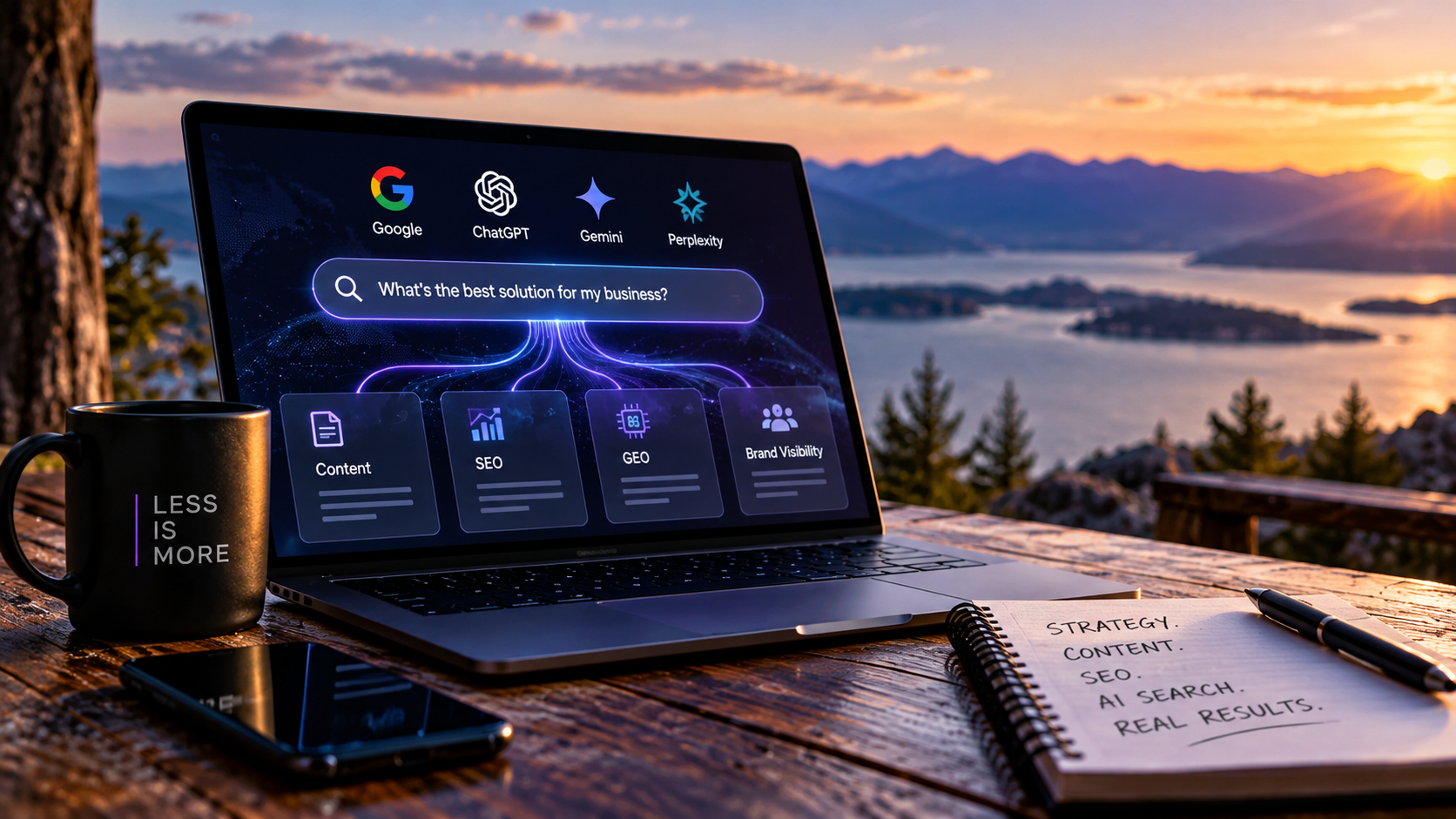
SEO Is No Longer Enough: How AI Search and GEO Are Changing Brand Visibility
Discover how SEO, AI Search and GEO influence brand visibility, and learn five practical ways to improve your business's online discoverability.